Showing posts with label Teens. Show all posts

Thursday, September 5, 2013

Stick a Pin in It: Pinterest Program for Teens

This is an inexpensive, passive program that engages teens' imaginations
 and encourages social media participation.

5 Easy Steps:
I'm a QR code!
  1. Set up a Pinterest profile for your library.
  2. Create a QR code that links to your Pinterest page. Free QR codes can be created at a number of websites such as QR Stuff or Go QR.
  3. Print out quarter-sheet fliers advertising the activity. Include the QR code on flier and the instructions for getting approved to pin on specific boards (see below).
  4. Advertise your program on social media sights and wait for the follows.
  5. When a teen follows your library's Pinterest board invite them to pin on YA specific boards to create YA lit collages.
Instructions for program flier:
  • Follow *Pinterest Profile Name* on Pinterest
  • Accept the invitation to pin that *Pinterest Profile Name* will send you
  • Pin YA Literature related items to appropriate boards. Note: Pinning of inappropriate materials will result in Pinner's account being blocked and reported.
Don't know how to invite people to pin on a group board?  Check out Pinterest's Help page.

Suggested Ideas/Themes for YA Group Boards:
  • Dystopian Future
  • Favorite Teen Reads or Favorite Authors
  • Hunger Games
  • Manga
  • Mortal Instruments
  • Paranormal
  • Percy Jackson
  • Program Ideas/Suggestions
  • First Love

Tuesday, July 9, 2013

Kick-Ass Femmes in YA Literature - Part 3


Scarlet of Marissa Meyer's Scarlet
Book 2 of the Lunar Chronicles

Scarlet's grandmother disappears without a trace and the police refuse to investigate citing her grandmother's odd nature.  Undeterred, Scarlet begins tracking down her grandmother's whereabouts with the assistance of the strangely intriguing fighter, Wolf.  Little does Scarlet know that the trail will land both Scarlet and Wolf at the center of an interplanetary war.

Traits: Loving, Curious, Insightful, Accepting
Danielle of Lauren Roedy Vaughn's OCD, The Dude and Me

Danielle doesn't fit in.  Which doesn't really bother her - she likes keeping people at a distance, but does land her in a social skills class where she meets Daniel, a boy who is determined to know the real Danielle.

Traits: Original, Quirky, Free-spirited, Thoughtful
Addison of Kasie West's Pivot Point

When faced with a choice, Addison has the unique ability to see the futures attached to each decision.  After her parents announce they are getting a divorce and Addison much choose which parent to live with, she uses her ability to view the results of her choice.  No matter which choice Addison makes, she will lose someone dear to her.  Which choice would you make?

Traits: Insightful, Loyal, Independent, Friendly
Mary Shelley of Cat Winter's In the Shadow of Blackbirds

America 1918; the height of the Spanish Influenza pandemic. Dead line the streets and Spirit Photography and seances prey on the grieving. Mary Shelley doesn't believe in Spiritualism or that the dead really can commune with the living.  But logic and reason are hard to hold onto when you are haunted.

Traits: Scientifically Minded, Curious, Logical, Thoughtful
Juliet of Megan Shepherd's The Madman's Daughter

Daughter of the infamous Dr. Moreau, Juliet is barely surviving when she discovers that her father is actually alive and in hiding on an island in the South Pacific. Finagling passage to the island, Juliet comes face to face with the horror of Moreau's madness.

Traits: Determined, Kind, Curious, Pragmatic


Who is YOUR favorite heroine?

Friday, May 10, 2013

The Tough Conversations: Bystander Complacency and Responsibility

All that is necessary for the triumph of evil
is that good men [and women] do nothing.
- Edmond Burke

Bystander Complacency, also called known as the Bystander Effect or the Genovese Syndrome by social psychiatrists, occurs when individuals witness a crime but do not offer the victim any help.  There is a direct relationship between the number of witnesses to a crime and a lack of response by individuals - the larger the number of bystanders, the less likely anyone is to intervene or report the crime.  Two recent cases of bystander complacency involve a 2-year-old in China, Wang Yue,  who was struck by a car in 2011 and left in the street as at least 18 people walked past and the 2009 gang rape of a 15-year-old outside a school dance which was witnessed by at least 20 people.
TAKE A STAND!
The basic psychology of  bystander complacency is the result of a perceived diffusion of responsibility.  Witnesses of a crime don't see anyone else intervening or calling for help, so they assume that lack of response is the correct response.  It is time to take responsibility for your actions, even if those actions are a lack of taking action.

It is true that you cannot control the actions of the people around you, but you can control your response to their actions.  Is it scary? Yes. But you will feel so much better knowing that you did not stand by and let something awful happen.  The above examples are extreme, but bystander complacency occurs when you watch someone get ridiculed and do nothing, or witness a crime and fail to notify authorities.  When you see someone being bullied and you don't call out the aggressor or notify an adult you are just as responsible as the bully.

Does taking responsibility mean putting yourself in danger? No. If you are at a party and you observe some guys messing with a girl who seems inebriated, you don't necessarily need to put yourself between the aggressors and the victim.  You can find an adult, or you can notify authorities.  If you are worried about getting in trouble for underage drinking or illegal drug use, leave the party and make an anonymous phone call to the police.  Honestly, which is worse: getting in trouble for being a teenager or preventing a rape, physical abuse or psychological damage?

Somebody has to be the "somebody else" who takes action.

Need help learning to Take a Stand?
Assertive Advocacy
Overcoming the Bystander Effect
Staying Safe While Helping Others
Stop Bullying
Take a Stand!
We Are All Bystanders

Thursday, May 9, 2013

Art-A-Love-It Challenge

This summer, I am trying to run several passive programs to reach teens that are too busy (or otherwise unable) to attend active programs at the library.  Since art is a big part of my life, I decided to create the Art-A-Love-It Challenge to encourage teens to begin to notice and appreciate the beauty in their own communities.

What You Need
Signage
Mini-fliers with information
Email that someone checks regularly
Tumblr account

How It Works
Each week has a new "inspiration word" to focus the teens' art search.  Teens will keep their eyes peeled for something that matches the theme then snap a photo and email it to a predetermined email address.  Once the photos have been approved (no nudity, gang signs etc) the photos will be loaded onto our Art-A-Love-It Tumblr so the world can view the teens' photos.

My "inspiration words" this year are: LIQUID, GREEN, MOVEMENT, NATURAL, LIGHT, LOVE, REBELLION, OLD, TRANSITION and SUMMER.  These words are deliberately vague and open to interpretation; I want teens to think outside the box. :)

Beyond Digital
Depending on the number of pictures submitted, I may print several of the images and post them in the teen area.

Monday, May 6, 2013

The Tough Conversations: What is Consent?

In the last several months there have been three rape cases that have grabbed worldwide headlines: Stueben ville, Audrie Pott, and Rehtaeh Parsons.  Each of these cases included the following: incapacitated teenage girl, group of teenage boys (probably themselves impaired by alcohol or drugs), social media, complacency of bystanders.  In two of these cases, Audrie Pott and Rehtaeh Parsons, the victims eventually committed suicide after enduring months of torment from their peers.  Clearly it is time to talk to our teens about consent.

What is Consent?
According to the West's Encyclopedia of American Law consent is: Voluntary Acquiescence to the proposal of another; the act or result of reaching an accord; a concurrence of minds; actual willingness that an act or an infringement of an interest shall occur. Consent is an act of reason and deliberation. A person who possesses and exercises sufficient mental capacity to make an intelligent decision demonstrates consent by performing an act recommended by another. Consent assumes a physical power to act and a reflective, determined, and unencumbered exertion of these powers. It is an act unaffected by Fraud, duress, or sometimes even mistake when these factors are not the reason for the consent...In the context of rape, submission due to apprehension or terror is not real consent.
 
Yale College's website uses the following definition for Sexual Consent: Sexual activity requires consent, which is defined as clear, unambiguous, and voluntary agreement between the participants to engage in specific sexual activity. Consent cannot be inferred from the absence of a "no"; a clear "yes," verbal or otherwise, is necessary. Although consent does not need to be verbal, verbal communication is the most reliable form of asking for and gauging consent, and individuals are thus urged to seek consent in verbal form. Talking with sexual partners about desires and limits may seem awkward, but serves as the basis for positive sexual experiences shaped by mutual willingness and respect.  Consent cannot be obtained from someone who is asleep or otherwise mentally or physically incapacitated, whether due to alcohol, drugs, or some other condition. Consent cannot be obtained by threat, coercion, or force. Agreement given under such conditions does not constitute consent.  Consent must be clear and unambiguous for each participant throughout any sexual encounter. Consent to some sexual acts does not imply consent to others, nor does past consent to a given act imply ongoing or future consent. Consent can be revoked at any time. For all of these reasons, sexual partners must evaluate consent in an ongoing fashion and should communicate clearly with each other throughout any sexual encounter.

What does this mean for teens?
  • If alcohol IN ANY AMOUNT or drugs of ANY KIND are involved CONSENT CANNOT BE GIVEN.  Any sexual activity that occurs is assault or rape.
  • If someone is ASLEEP, PASSED OUT, or otherwise UNCONSCIOUS, consent CANNOT BE GIVEN.  Any sexual activity that occurs is assault or rape.
  • UNLESS you get a clear, definitive and un-coerced verbal "yes" then assume that you DO NOT HAVE CONSENT and any sexual activity that occurs is assault or rape.
Sexual consent is like pregnancy, there is no grey area - you either have consent or
your are committing a crime and subjecting someone to sexual assault and/or rape.

Talk to your teens.  It may be an uncomfortable or embarrassing conversation, but it is one that needs to happen.  Clearly there is a disconnect between the conversations we, as a society, and the realities that our teens are facing daily.
  

Thursday, May 2, 2013

TLA 2013 Panel: Teen Book Festivals 101

Jen Bigheart, Natasha Benway and myself presented Teen Book Festivals 101 at TLA 2013 in Fort
Worth, TX.  As promised here is the link to a PDF of the outline here as well as a PDF of the powerpoint presentation.

Please feel free to contact any of us with questions.

Rebecca Denham
@lunanshee
lunanshee at gmail dot com

Jen Bigheart
@jenbigheart
jenbigheart at gmail dot com

Natasha Benway
natasha.benway at countylibrary dot org


Wednesday, April 17, 2013

Do you know SAAM?

April is Sexual Assault Awareness Month, Part 1

Sexual violence will impact the life of someone you know.  You, yourself, might be the victim of sexual violence.  Almost 1 in 5 women in the United States report being raped at some point in their lives. Almost 5% of women and men living in the United States have experienced sexual violence other than rape.  The data when broken into age groups is even more distressing.


A 2011 survey conducted by the CDC found that 11.8% of girls and 4.5% of boys in grades 9-12 reported being forced into sexual intercourse at some time in their lives.  Of female rape victims, 42.2% were raped before they reached age 18.  This means that anyone working with teens is likely to be interacting with a victim of sexual violence. Even more traumatic than the violence itself is the fact that the majority of rapes are committed by people the victims know; 51.1% of female rape victims report being raped by an intimate partner; 40.8% by an acquaintance, male victims of rape have similar statistics with 52.4% reporting rape by acquaintance.  So how do you address these very sensitive issues with your teens?

Talk to Them (and Their Parents)
Ensuring that adults understand characteristics of healthy sexuality and sexual development in children allows parents and those working with youth to recognize risks and challenge negative messages.  Parents, you need to discuss sexuality with your children in an age-appropriate manner.  There is no way to completely limit your child's access to the Internet, experience of their peers, or society. According to Internet Safety 101, 7 out of 10 youth have accidentally stumbled across pornographic images or videos while surfing the web. One third of youth who view pornography online are doing so intentionally.  Bottom line: your sons and daughters will be exposed to sexually explicit material.

Sexuality is more than just sex, it encompasses attitude, values, emotions, and interactions and is shaped by both society and culture.  Talking about sexuality with youth can be uncomfortable, but is necessary to discourage child sexual abuse and to fight negative messages about sexuality the permeate the media.  Information on healthy childhood sexual development can be found here.  The National Sexual Violence Resource Center has wonderful resources on sexual development and talking to your kids.

Now, librarians and teachers are often put in a difficult position since many parents are not comfortable with someone else "instructing" their teens in issues of sexuality.  This is the point where it is imperative that you engage with the parents of your teens to encourage them to open lines of communication.  If a parent is not involved in a teen's life, then (in my opinion) your interaction with the teen comes down to a judgement call.  Maybe you are the only person in their life who has ever talked to them about healthy relationships, beneficial boundaries and preventing sexual violence.  Personally, I'd rather get in trouble with a parent for spreading a positive message than perpetuate a cycle of silence and misinformation.

Be prepared for some awkward questions and, possibly, to blush yourself; but the conversation needs to happen. The sad fact is that many of your teens will be victims, or perpetrators, of sexual violence at some point in their lives.  Talking about healthy sexuality, boundaries and healthy relationships is key to helping past victims heal as well as working to prevent future victims of sexual violence.

Some resources:
CDC
SAAM


Wednesday, February 27, 2013

What They Didn't Teach In Library School: When to Call for Help


'What They Didn't Teach In Library School' is a series of guest-authored posts,
written by YA Librarians from around the country, highlighting situations or skills
that were never addressed in formal Library School, but that are integral to librarianship.

When to Call for Help
by April Pavis

Being a Teen Services Librarian in an enclosed Teen Center, I have developed relationships with some of the teen patrons. Many of them visit the library on a daily or weekly basis, so I know their name and I ask them questions about the book they are reading, their vacation plans, or the results of the test they were worrying about. You could call us friends; I wouldn’t correct you – they are my teens. And, being a responsible adult and friend, I look out for my teens. Sometimes, though, I have to be the rule enforcer, the professional librarian, or the concerned adult.
 
One of the most difficult things I have done in my professional life is contact the police on behalf of one of my teens. Recently, one of my favorite teen patrons, game me a day-by-day account of his life the preceding week. Through stuttering, slurred words, and crying, he recounted skipping school, insomnia, fits of rage, and incidents of self-harm and domestic abuse. He is one of my most clever, fascinating patrons and I love when I catch him in my peripheral vision walking quickly towards me to tell me about the hilarious moment he had with his friends, or the TV show he loves. But that day I knew that if I didn’t get him some help, he wouldn’t be that nice, funny boy any longer. He needed someone who could intervene in his domestic situation and a trained individual to help him safely work out his emotions. He needed more than I, in my position of Teen Services Librarian, could give him. I made the call and I cried as I gave the policeman my information, knowing that, in this boy’s eyes, my actions would likely be viewed as a betrayal. But I had to make a decision between keeping our friendship and ensuring his safety. I had to go with my conscience – not to mention my legal responsibility.

Librarians are not trained social workers. We have no scripts or procedures (beyond vague ‘library policy’) to follow if we suspect a teen is in need of serious help. Some of us are able to recognize signs of distress in our patrons even when they are not able or comfortable enough to use words to express themselves, not because we are taught to see them but because we are in tune with the teens we serve. One major red flag is out-of-character behavior. The aforementioned teen is autistic and therefore a bit eccentric and prone to brief moments of anger, but the tears and grief I heard in his voice that day were new. More than his explanation of the previous days (as hyperbole is a normal part of the teen language) it was that sudden and severe change that fully convinced me he needed outside help.

As librarians serving teens, we encourage teens to interact with us; to share their hopes, dreams; their highs and lows. Teens have talked with me about bullying, fighting, suicide, and domestic abuse and I have had to decide numerous times whether the issue warranted legal/professional intervention. For less-severe issues I usually go to a teen’s friend and express my concern to them, letting our mutual concern for the teen initiate the conversation. Sometimes my fears are quelled, other times I help the friend devise a plan to help their suffering peer. But the bottom line is: there is no real guidebook for teen serving librarians when the ‘Social Worker’ roll is required. We are, more often than not, on our own.

I wish there were a class to take, a book to read, or a manual to follow, but more often than not there is no time to consult such materials even if they did exist. We have to use our instincts, our past experiences, and the wisdom of our peers to help us make the best decision for each situation and hope for the best.

How have you dealt with difficult situations with teens in your library? Leave a note in the comments answering this question and help others learn from your experiences.

About April:
April is a Teen Services Librarian in a Northern Virginia public library. She reviews books on her blog A Librarian's Take and spends time with family and friends, and swims in her free time (which there is very little of after reading so many books!). April can also be stalked via Twitter @alibrarianstake.

Want more posts on issues not covered in Library School?
Check out Teen Librarian Toolbox's series Behind the Scenes @ the Library.
What They Didn't Teach In Library School Post Schedule
January 1, 2013 - Overcoming the Pied Piper Syndrome
January 16, 2013 - Finding Balance - The Enforcer vs. The YA Librarian
January 23, 2013 - Dealing with Peeps Not Like Me
January 30, 2013 - Mousy & Mild Won't Cut It
February 6, 2013 - Community Service and the Library
February 13, 2013 - Dealing with the Angry Folk
February 20, 2013 - Mistakes as Opportunities
February 27, 2013 - Librarians as Social Workers
March 6, 2013 - Adapt or Perish
March 13, 2013 - No Do-Overs
March 20, 2013 - Promotion & Programming


Wednesday, February 6, 2013

What They Didn't Teach in Library School: The Library & Community Service


'What They Didn't Teach In Library School' is a series of guest-authored posts,
written by YA Librarians from around the country, highlighting situations or skills
that were never addressed in formal Library School, but that are integral to librarianship.
 
The Library & Community Service
by Martha Mikkleson

I never took a course on the Public Library as Community Service provider. No one warned me when I was in library school, that someday a major part of my job would be finding volunteer opportunities for teens to satisfy church and school requirements. Today, an important part of my job as a YA Services Librarian is responding to phone calls and email messages from parents desperate to find an agency that will sign off on 3, 8 or even 20+ hours of volunteer service. I also get calls from teens themselves wanting to volunteer to gain experience for job and college applications, and some who simply want to give back and be of help to their community.

When I began as a new librarian at my large suburban library, there were 2 volunteer opportunities we could offer teens seeking to satisfy confirmation or participation in Government class requirements: dusting the A/V materials (open to any and all interested teens) and Book Buddies  (open to tweens in grades 6 though 8). The first option - dusting - was boring, simple and completely meaningless for the teens performing it. Book Buddies, on the other hand, was fun, useful and meaningful. Teens provided a valuable service for their community and learned something about themselves and younger children. They felt that their service was important and had an impact on others. But both of these options fell short of meeting the demand - there were simply not enough hours of service available for all those needing to volunteer.

After picking the collective YA programming brain - listserves, books, websites, and YA librarian colleagues, I began to model new programs on the Buddies model - Craft Buddies, Tech Buddies, Music Buddies and Study Buddies. Some of these have been wildly successful. Study Buddies meets for 12 hours and serves an average of 100 kids and 20 teens per week. Others are limping along, still trying to find their audience. Each month I spend more and more of my work day monitoring, evaluating and attempting to improve the volume and value of community service programs at out library. My administration encourages me and gives me every opportunity to experiment - to try, to  succeed and sometimes, to fail. Coordinating volunteer opportunities for teens is now the majority of my job. Without support and demand from the entire library community for meaningful community service opportunities for young people this would not have happened.

If I were teaching the course on the Public Library as Community Service provider, I would stress this - read your Library’s vision and mission statements. If they profess a dedication to providing educational, cultural and recreational opportunities for their community - you must hold the administration, Library Board and/or Directors that promise. Community service opportunities for youth clearly fall under this banner. You must make it your personal mission to create those opportunities for your young people. Your community will flock to you and make your Library a model for others to follow. And at the end of the day you will be tired, but happy.


About Martha
I have been a YA services librarian since 2001, and have never been happier. Prior to that I worked at many jobs, but most notably for a daily newspaper - NEWSDAY on Long Island - in the art, photo and prepress departments for a total of 18 years where I developed an expertise in layout and paste up, darkroom work, photography and electronic prepress. My passions include walking, nature photography, animals, hand bookbinding and sharing my passions with the teens I serve. I currently serve the YA Services department of the Patchogue-Medford library on Long Island, NY as coordinator for programming and community services. I love getting up (but not too early) for work - which seems, at most times, more like play!


Want more posts on issues not covered in Library School?
Check out Teen Librarian Toolbox's series Behind the Scenes @ the Library.
 
What They Didn't Teach In Library School Post Schedule
January 1, 2013 - Overcoming the Pied Piper Syndrome
January 16, 2013 - Finding Balance - The Enforcer vs. The YA Librarian
January 23, 2013 - Dealing with Peeps Not Like Me
January 30, 2013 - Mousy & Mild Won't Cut It
February 6, 2013 - Community Service and the Library
February 13, 2013 - Dealing with the Angry Folk
February 20, 2013 - Mistakes as Opportunities
February 27, 2013 - Librarians as Social Workers
March 6, 2013 - Adapt or Perish
March 13, 2013 - No Do-Overs
March 20, 2013 - Promotion & Programming


Wednesday, January 16, 2013

What They Didn't Teach in Library School: Finding Balance - The Enforcer vs. The YA Librarian

'What They Didn't Teach In Library School' is a series of guest-authored posts,
written by YA Librarians from around the country, highlighting situations or skills
that were never addressed in formal Library School, but that are integral to librarianship.

What They Didn't Teach in Library School:
Finding Balance - The Enforcer vs. The YA Librarian
by Emily Passey

One thing I wish I’d learned in library school is how to be an authority figure without being The Man.

As youth services librarians we are in a tricky position when it comes to enforcing rules with children and teens in the library. For many of us, youth services librarianship is about providing that special third space - a safe, alternative resource for kids outside of school and home. But for all that I learned in grad school about my important role in creating that safe space, I am left with this burning question: what does authority look like in the library? How can I model the library as a welcoming environment while also enforcing the rules?

At my small public library in a densely populated suburb of Milwaukee, we have a steady flow of after-schoolers whose ages range from kindergarten through 12th grade. They come from three different schools, two public and one private, and bring a host of personalities, backgrounds, experiences and interests. Let’s face it, they also bring a host of behavioral problems, and, almost universally, it seems they bring a mindset that the library is a space without rules or boundaries. Most have been coming to my library for years, and in that time have been under the watch of several different librarians who have done their utmost to enforce our behavioral guidelines. I’ve learned first hand from the younger kids (K-7) that they do not like the ways that the rules have been enforced at the library, although I would guess this is at least partially attributable to their general dislike of our behavioral policy. Yet their frankness about their experience at the library has lead me to think deeply about how we could be enforcing our rules differently.

It seems to me that the problem is thus: when kids act up, they don’t expect to be told by a mere librarian to shape up or ship out. We’re their pals and their book finders, not their teachers or their parents. We don’t give detention or send home report cards. We definitely don’t ground kids. But when it comes time to lay down the law my persona as Friendly Computer Assistant/Homework Helper/Non-Judgemental Inquirer About Their Daily Lives does not go far in enforcing my requests for them to change their behavior. They often remain defiant, not seeing any of us librarians as legitimate rule-enforcers.

While I need to communicate that bad behavior will not be tolerated, I do not want to become the stereotypical "shushing librarian" of generations past. But I do have a behavioral policy - which predates my employment - to enforce, whether I like it or not. I don’t want to banish kids even momentarily from the safe haven of the library. I definitely don’t want them to get it into their easily-influenced heads that the library is a boring, quiet place where the librarian is always breathing down their necks about everything little infraction. Yikes - that is the opposite of what I feel my duty as a librarian entails! But, as I tell the kids every day, “in the library there are rules,” and when the disregard of them could harm other children, I have to step in to the situation and that sometimes means being or calling, I kid you not, the police.

Daily I must figure out how to be an effective authority figure and police the behavioral issues that plague our after school hours, while not falling into the trap of being “The Man.” I want to nurture in these kids a love of the library as a place to hang out and use the computer and find a little non-judgemental adult interaction.  But that desire to nurture must be balanced with enforcement of the rules they must follow if they want to be allowed to use this special place. My trial and error method includes a healthy dose of the word “respect,” and a lot of talking to them about working out problems amongst themselves, treating each other and the library well, and bringing a good attitude every day.

My dream is that the after school crowd grows up to be my Teen Advisory Board, but the only way to make that happen is to build strong bonds founded on their respect of the library and of my authority and my respect of them. I’m in it for the long haul because I just can’t help but feel a deep attachment to the little band of misfits who call my library home for a few hours everyday.

About Emily
Emily Passey is Young Adult Librarian at Shorewood Public Library in Shorewood, WI, a suburb of Milwaukee. She graduated from University of Illinois Urbana-Champaign in May 2012 with her Masters in Library & Information Science.  Emily writes and manages her library's teen blog, Shorewood Library Teens and also manages the social media for her library which is currently just in the form of a Facebook page but is growing all the time! She is currently reading Waiting by Carol Lynch Williams and Grave Mercy by Robin LaFevers.

Want more posts on issues not covered in Library School?
Check out Teen Librarian Toolbox's series Behind the Scenes @ the Library.
 
What They Didn't Teach In Library School Post Schedule
January 1, 2013 - Overcoming the Pied Piper Syndrome
January 16, 2013 - Finding Balance - The Enforcer vs. The YA Librarian
January 23, 2013 - Dealing with Peeps Not Like Me
January 30, 2013 - Mousy & Mild Won't Cut It
Feburary 6, 2013 - Community Service and the Library
February 13, 2013 - Dealing with the Angry Folk
February 20, 2013 - Mistakes as Opportunities
February 27, 2013 - Librarians as Social Workers
March 6, 2013 - Adapt or Perish
March 13, 2013 - No Do-Overs
March 20, 2013 - Promotion & Programming


Monday, January 14, 2013

Review: 'Flirting in Italian' by Lauren Henderson

I’m mesmerized by the views... like a whole series of postcards brought to life.

Violet Routledge is shocked when she stumbles upon an 18th century painting of an Italian girl who looks exactly like her. Determined to discover the possible family connection, Violet convinces her mother to send her to a summer study course in Tuscany, close to the area where the portrait was painted. Violet, along with three other girls, quickly falls under the spell of the Tuscan countryside and, more importantly, the handsome and charming Italian boys. But when one particular boy with ties to the painting – the gorgeous, yet confusing, Luca - takes an interest in Violet and strange things start happening to her, she begins to wonder if the mystery is worth solving.

I picked up Flirting in Italian during my continued quest to find the perfect Anna and the French Kiss read alike. A YA novel with such a happy, brightly colored cover (it features a purple Vespa!) and a story set in the countryside surrounding Florence seems like the perfect fit. Unfortunately, what started as a charming chick lit novel quickly devolved into a poorly balanced mash-up of contemporary romance and mystery.

In Flirting in Italian, Henderson demonstrates a pleasing, easy to read writing style. She seamlessly moves between sweeping descriptions of the Italian countryside and silly conversations between teenage girls, Italian dialogue and English slang. Even as I was becoming more and more frustrated with the story, I was being pulled further into Henderson’s writing. Unfortunately, even a pleasing writing style wasn’t enough to save the jumbled mess of plot. I have read a few chick lit mysteries and enjoyed them, but this felt more like Henderson was writing two different stories – a mystery and a contemporary romance. The two elements never seemed to blend, resulting in an uneven story.

Flirting in Italian also lacks fully developed characters. Most of the secondary characters were caricatures, either of happy-go-lucky Italians or American teenage girls. I found it especially difficult to sympathize with Violet. She was incredibly self-absorbed and inconsistent, more so than a normal teenage protagonist. In one breath she loves her mother, yet in the next she’s ashamed of her antics. In one thought she is grateful for her friendship with the other girls in the course, yet in the next she is second-guessing their motives. Her relationship with Luca is even more fraught with these roller coaster emotions. And, although Luca is described as physically beautiful, his personality was so sneering and snobby that I couldn’t even understand why any teenage girl would want to be around him.

One thing I was most looking forward to with this novel, was descriptions of Florence and its many attractions. While Henderson does a wonderful job discussing Italian culture and describing the countryside surrounding Florence in vivid detail, the city itself is mostly neglected. These girls are supposed to be in Italy to study, yet they seem to spend all their time flirting and their only visit to Florence is spent clubbing and eating pizza. Florence is one of my favorite cities to visit, and the lack of time spent in the city was disappointing.

This book’s final weak point was the ending. I was not aware that it was the first book in a series until near the end of the story - a huge pet peeve of mine. The ending was abrupt and almost nothing was resolved, leaving questions unanswered and one plotline at a, frankly, uncomfortable and creepy point. The end of the book was so completely unexpected and unsatisfying that it destroyed any good will I might have felt toward the novel.

All told, Flirting in Italian was a disappointing read, riff with problems. It certainly wasn’t the sweet, happy Anna and the French Kiss read alike I had hoped, and I don’t feel particularly compelled to pick up the sequel.

Book Source: Local Library
Reviewer: Kimberly

Recommended Ages: 14+ for intense amounts of boy craziness

Recommended for Readers of:


Wednesday, January 9, 2013

What They Didn't Teach In Library School: Overcoming the Pied Piper Syndrome

'What They Didn't Teach In Library School' is a series of guest-authored posts,
written by YA Librarians  from around the country, highlighting situations or skills
that were never addressed in formal Library School, but that are integral to librarianship.

Overcoming the Pied Piper Syndrome:
Never Work Harder Than Your Students
by Holly Gillum

Had known my transfer to the high school library would make me a pied-piper of teenagers, I might have reconsidered my application!  I am still learning how to adjust to my sudden “popularity” and it’s a constant battle to maintain my professional distance, coordinate needed and interesting programs, and retain my sanity all at the same time.  Long story short, I was able to transfer to the high school library last year after 10+ years in elementary.  I began physically redecorating and watched to see what was used, needed, and/or desired.  Oh, what I have learned!

As former students, there is a level of familiarity with these kids and what I call “automatic respect.”  I don’t have many discipline problems and I seem to attract the at-risk and/or “different” students.  Just my cup of tea!  (Frankly, I’ve never met a completely sane librarian anyway.  How boring would that be?)  I love my new environment.  I love reconnecting with former students.  I love the fact they read BIG books.  But there are some drawbacks to being the "Cool Librarian"; I'm followed every step of every minute of the day!  Most of you are aware the being a Library Media Specialist is somewhat of a solitary job.  Many of our students, teachers, and yes, even administrators, have no idea what goes on in our libraries.  Through the library's doors lie a mysterious vault of knowledge that one ventures into only when one must.  I enjoy the mysterious persona, but my kids have discovered my secret.  I get paid to play with books all day.

In making my library an interesting place to visit, I’ve introduced a seating area with an attractive book display.  I added a BOGO (bring one, get one) paperback exchange shelf, and on a whim, picked up some card games and board games.  Little did I know it would only double my population and turn my lunch times into a circus!  I love being surrounded by teens, but it’s exhausting.  So, to preserve my sanity, I’m learning to set boundaries.

In finding ways to fill their time constructively, I’ve developed a set of easy guidelines and put them to work.  I have a student who runs my coffee shop in the morning before school.  I have another who manages my computers – turns them on/off and makes sure they are logged out appropriately.  I have a student who shelves books and because of her love of ABC order, does random shelf-checks.  One of my guys likes to keep the periodicals in order and I have another who “stickers” and “wraps” all of my new books.  I have a “Tree of Talent” painted on an entry wall where I’ve hung picture frames featuring poems, short writings, and drawings by students and a student who manages it.  Five periods out of seven I have a volunteer library worker who runs the circulation desk for me and collects passes.  I have managed to out-source all of my more tedious jobs, leaving me time for the behind-the-scenes maintenance that only I can do.  I still end up eating lunch at my desk with an audience, but I can do so knowing my library is being cared for appropriately.

My first rule for my new semester this New Year: Never Work Harder than the Students.  I’m learning as I go and it’s definitely a work in progress.  Don’t be afraid to trust them to help - teens can be one of your greatest resources and supporters.  Even better, they are training others, tweeting on little pied-pipes of their own.  Turn loose of the reins and give them a chance.  You’ll be amazed at what they can do.

About Holly
Holly Gillum is a first year High School Librarian with 10+ years of elementary librarianship under her belt.  She began her career as a 4th grade teacher but ran screaming from the classroom as fast as she could into the Best. Job. Ever!  Holly's hobbies are reading, reading, oh, and reading!  (She's really trying to cut back and work on more writing, blogging, and anything that would involve sunshine.)  She loves to cook, dust, and do the bidding of her feline companion, Sassy, whose attitude could give Grumpy Cat a run for his money.  Holly and her husband live on a "working ranch" (only a slight exaggeration as it entails LOTS of work) in Southeast Arkansas.  She can be found on her personal blog, www.mydeepwoodslife.com, twitter as @crossetthslib, or on facebook - search for Crossett High School Library.

Want more posts on issues not covered in Library School?
Check out Teen Librarian Toolbox's series Behind the Scenes @ the Library.

What They Didn't Teach In Library School Post Schedule
January 1, 2013 - Overcoming the Pied Piper Syndrome
January 16, 2013 - Finding Balance - The Enforcer vs. The YA Librarian
January 23, 2013 - Dealing with Peeps Not Like Me
January 30, 2013 - Mousy & Mild Won't Cut It
Feburary 6, 2013 - Community Service and the Library
February 13, 2013 - Dealing with the Angry Folk
February 20, 2013 - Mistakes as Opportunities
February 27, 2013 - Librarians as Social Workers
March 6, 2013 - Adapt or Perish
March 13, 2013 - No Do-Overs
March 20, 2013 - Promotion & Programming

Thursday, November 1, 2012

TEENS4TEENS: Peer Tutoring Program

One of the questions I have been asked constantly while working in a public library is: where can my child get tutoring for _________ (subject)?  Since my current library does not offer tutoring for children or teens of any kind, I decided to get a little creative and give my teens another volunteer opportunity.  Thus was born TEENS4TEENS (T4T).  I've been running this program for about two months now and have approximately 30 teens involved with the program.  So far, response has been overwhelmingly positive.

This is a low cost program but does require a substantial amount of time to set up and coordinate.  However, you are providing a great service for your teens who are struggling academically while allowing the teens who need volunteer hours a chance at earning on a weekly basis.  This program really is win/win for the teens involved.

How do I start a T4T Program at my library?

  • Set 2-3 specific times during the week as T4T official times.  Example: Mondays & Thursdays 6:30-7:30pm and Saturdays 10:30-11:30am.  I recommend limiting tutoring sessions to one hour, once a week so as to not overwhelm Teen Tutors.
  • Reserve a specific (public) meeting space for T4T - To protect both you and your teens you want the tutoring session to occur in the open, not in a closed room.  Example: My library's T4T sessions occur at the tables in the Teen Area.  I have signage posted that that are is reserved for T4T during the three days/times of official T4T tutoring sessions.  If someone is loud they are asked to move.
  • Limit ages for both tutors and students. Example: I only take 12-18 year olds in grades 6-12.
  • Develop both tutor and student application forms as well as signage for the program.  Example: See Files tab at top of blog.
  • Create form letters for First Meeting Introduction, Tutor Instructions and Student Instruction emails. Example: See Files tab at top of blog.
  • Contact local schools to let them know about the program and that you are looking for teen volunteers.
  • Set limit to number of times either a tutor or student can "no show" before being removed from the program. Example: My program has a three strikes rule. If a tutor/student fails to show three times (not consecutive) without contacting the library or the person they are meeting, they are dropped from the program.
  • Devise a way to track teen volunteer hours. I track mine on a monthly basis by having teens sign in and out each week and then entering the information on an Excel sheet.
I've done all that.  Now what?
Now comes the hard part - coordinating it all!
  • As teens begin submitting applications begin matching them based on meeting time and subject.
  • When parents submit applications for tutoring (i.e. needing tutoring) make sure they are aware that the tutors are volunteers and that it may take some time to match their child.
  • Prepare for the program to start off slowly.  As word spreads about "free tutoring" you'll likely begin getting more "needs tutoring" applications than you can keep up with. I just keep them on file and contact the teen/parent via email every week or so until I can get them matched.
Issues You Will Face:
  • As you know, teens can be notoriously flaky.  Tutors show and their students don't or students show and their tutors don't.  This is why I've developed the three-strikes rule and am very strict in enforcement.
  • Teens don't always check their email.  If I have sent an email and not gotten a response within 48hrs I call and leave a message for the teen to contact me.  (Training teens to check their email at least every other day is good for older teens as they begin applying for scholarships and colleges.) Feel free to point out that it is their responsibility to check for the message as you will not have enough time to call everyone involved in the program.
  • Pushy parents.  There will be parents who harass you about matching their students or who will have unreasonable expectations about what kind of tutoring is being offered.  Make it clear that this is a peer tutoring program and that teens are helping other teens.

Tuesday, June 19, 2012

The "Positively-Negative Parenting" Phenomenon: Part 1

I've been a Young Adult Librarian for more than five years now and have noticed a concerning trend that I'm calling the "Positively-Negative Parenting" Phenomenon.

Every parent wants their children to read.  Reading goes hand in hand with education and all parents want their children to succeed in school, get educated and acquire the tools they need to do well in life. To that end, parents encourage children to read.  Which is a wonderful goal.  But what happens when parents sabotage their childrens' literary efforts without realizing the damage being committed.  What happens when the parent is "positively-negative"?

The Wake-Up Call
(Names in this story have been changed to protect customer identities.)
Last week, I had a mother, Rose, and her teenage daughter, Sasha, come to the reference desk.  The first words out of the mother's mouth was about how her daughter didn't like to read.  The mother had tried giving her daughter all kinds of books to read and she didn't like any of them.  Therefore Sasha didn't like to read.  She was a smart girl, her mother assured me, Sasha just didn't like to read.

I started talking to Sasha, asking the normal librarian questions to try and narrow down a genre or title that might appeal to her. (i.e. "What kind of TV shows/movies do you like?  What kind of video games? etc.)  After discovering that Sasha enjoyed the new Teen Wolf show on MTV as well as Vampire Diaries on CW, I took her into our YA Area to see what titles were actually on the shelf that might have appeal.  While I was talking to Sasha, Rose often interjected - she had given Sasha Twilight by Stephenie Meyer, but Sasha didn't read it.

Now, my style of "lets find book suggestions" goes something like this: I walk around my YA Area with the teen pulling books off the shelf for the teen to look over.  By the time we finish walking the area I will have pulled between five and ten possible titles.  I then leave the teen to peruse the selections to see if any have appeal (there is usually at least one title in the stack that the teen picks up).  As we walked around the section I executed my usual process, talking to Sasha, pulling titles off the shelf, giving a brief description and letting her make a split-second decision to take another look at the title or move on to the next.  As we did this, Rose continued to make comments about how she had given her daughter this title or that title that Sasha wouldn't read.

My wake-up call came when I pulled Andrea Cremer's Nightshade off the shelf for Sasha to consider.  Sasha showed intense interest as I described the plot and actually reached out to take the book, when her mother grabbed the book out of my hand and told me that there was no way her daughter would read that book.  It was too long.  Now, Nightshade is a little over 450 pages in length, so it isn't a skinny read, but Sasha had showed interest.  Inside, I was outraged; how dare Rose take away a book that her daughter actually expressed interest in!  I managed to keep an outer cool and simply took the book back from Rose and handed to Sasha saying, "If she likes it, she will read it." After pulling several more titles I left Sasha (and her mother) in the YA Area to take a look through the books we'd pulled as possible titles of interest.

Several minutes later I noticed Sasha walking out with a book tucked under her arm.  Nightshade was the book she picked.

The Realization
As I thought over my encounter with Sasha and Rose, I realized that Rose's behavior, which I have dubbed "positively-negative parenting" was something that I'd seen over and over again.  This phenomenon is when a parent, with the best intentions, tries to encourage their teen to read, but in the process constantly references failed former attempts at reading.  One minute the parent is encouraging reading then, the next minute, the parent is bringing to mind failure, humiliation and disappointment in their teen.  While I am not a psychologist, I cannot help but wonder what kind of negative impact this kind of parenting has on teen readers.  It is an issue I plan to explore.

Now, I don't know if Sasha will make it through that book.  She may decide it isn't for her.  I told her that she couldn't hurt my feelings by telling me she didn't like a book.  If I know what she doesn't like I have a better chance of finding something she does like.  All I asked of her was that she make a real effort to read the book.  (That's one of the main purposes of YA Librarianship, to foster a love of reading in teens.)  I don't care what a teen reads as long as they are reading.

Has anyone else noticed this phenomenon?  I'd love to hear how you address it. 

Friday, December 30, 2011

Choice - It's Really All You Have

This one's for the teens:
What is the one thing in this world that is ever truly yours? Your choice.  Choices define who you are and what you will become.  Good choices lead to opportunities while bad ones can trap you in an endless downward spiral.  I'm not telling you anything you don't already know; saying 'make better choices' is easy.  The execution can be a bit more difficult.

Some important bits of information to keep in mind when presented with a choice:

YOUR GREY MATTER ISN'T FULLY FORMED
Don't let your still-developing brain
make you a zombie!
Photo by Daniel Hollister
For many years scientists thought that the human brain fully matured by three years of age, but more recent research has shown that the prefrontal cortex hits another stage of development sometime between puberty and the early 20s.  After this "growth spurt" the brain undergoes a process called "pruning" which is when neural connections (synapses) linking various parts of the brain are grown, removed and altered to make the brain function as a whole.  This process is also the time when synapses that aren't utilized are allowed to wither (i.e. use it or lose it).
What does this mean?
The prefrontal cortex controls such things as decision making, behavior control and problem solving.  As people with yet-to-fully-mature brains [ZOMBIES!] teens need to be aware of their own bodies and that they can't always depend on their first response to be the best one.  Now, having a teen brain does NOT mean you have an excuse to make poor choices - it just means that you need to STOP AND THINK about your choices and why you are making your decision.  Teens can make good decisions - it just sometimes takes them a bit more time to do it.

Bottom Line: When presented with an important decision take your time to consider your options and the effects of your choices.  Don't make decisions when running on an emotional high or low - allow yourself to calm down.  Your choices stay with you for a long time make sure you can live with the results. Need to talk to someone? Click here.

More Brain Stuff:


Tuesday, December 27, 2011

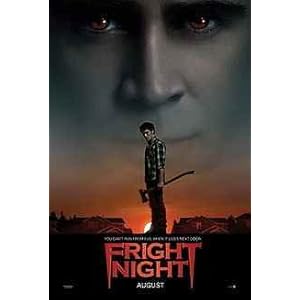
Fright Night? Not so much, but still fun.

Yes, I was bad and waited until dvd for the new 'Fright Night' and I'm here to tell you: pretty amusing, but I wish the dialogue had been a bit better.  But what should I expect from a remake of an 80s B movie classic. (Fun Fact: Traditionally a B movie is a low budget commercial film meant to be shown as the bottom half of a double feature.)

If you liked the new (or old) Fright Night, then here's a movie list for the B horror connoisseur:
Eight Legged Freaks (2002)
Evil Dead (1981)
Killer Clowns from Outer Space (1988) *Because regular clowns are freaky enough.
The Mist (2007)
Shaun of the Dead (2004)
Slither (2006)
Snakes on a Plane (2006)
Them! (1954)
Zombieland (2009)

Friday, December 23, 2011

Teens in the Library - Tips for Success

Libraries have changed drastically in the last twenty years, heck, they've changed a lot in the five years that I've been working as a public librarian.  Public Libraries are no longer the bastions of silence and snobbery that they used to be - we are much more flexible and welcoming institutions.  And that means for everyone, especially teens.  We want youth in the library!  Really, we do.  But there are a couple of things that teens need to keep in mind while utilizing our resources and facilities.

Follow these few steps and your Librarian can become an important ally:

  1. Respect: Just as you want respect from adults and your peers, we (and the other library users) are deserving of your respect.  Remember that the manner in which you present yourself is reflected in how people treat you - if you are loud and rude people will treat you accordingly, while if you are polite and conscientious people will be much more solicitous toward you.
  2. Listen: If a library employee (or patron) asks you to turn down the volume of your headphones, or lower your voice please do so.  *Want points with your librarian? Make sure to silence your cell phone when you enter the building.  More points to those who take their calls to the lobby instead of talking at the computer or in the stacks.*
  3. Look: Look around and check out signage in the library - there may very well be a program or event happening that YOU want to know about.  We've got TONS of free programs for teens, everything from movies and games to SAT Prep and author signings.
  4. Pay Attention: Libraries are *public* buildings, meaning that ANYONE can come inside and use our resources.  Libraries exist to serve people from all walks of life and, while this is a good thing, it means that you cannot depend on the library to be inherently *safe*.  Don't leave your cell phone or wallet/purse laying on a desk.  Don't leave a laptop unattended.  It takes seconds for things to disappear.  That being said, if you see a crime REPORT IT IMMEDIATELY to the librarians as the Information Desk.
Without a people to serve, libraries really have no reason to existence.  We LIKE helping people and providing access to INFORMATION - it's kinda what we do.  Please remember when visiting your local library to say thanks to your librarians, we work hard and we work for the public (which is never as easy as it looks).  Follow these few tips and your library experience will both informative AND enjoyable!